
White Shirazi Cat: Eye Colors, Deafness Risk and Coat Care

New to the breed? Start with our complete guide to the Shirazi cat, covering origin, care and health.
A white Shirazi cat is a solid white Persian, known as a Shirazi across the Middle East and prized for a snow-colored coat with no markings at all.
The color looks simple, but it comes with its own genetics, its own eye colors, and a hearing risk every buyer should understand before choosing a kitten.
Quick Facts
| Also Known As | White Persian, Solid White Persian Longhair |
|---|---|
| Coat Color | Pure white with no markings; a masking gene hides the cat’s underlying color |
| Eye Colors | Copper, blue, or odd-eyed (one of each) |
| Main Health Note | Inherited deafness risk, highest in blue-eyed whites |
| Grooming Needs | Daily combing and face cleaning; bath every 3 to 4 weeks |
| Temperament | Calm, affectionate, low-energy |
What Makes a Shirazi Cat White
White in this breed is not a pigment. It is a masking gene that hides whatever color the cat would otherwise be.
A white Shirazi is genetically a black, red, cream, or tabby cat wearing a white coat over the top. That is why two white parents can produce colored kittens.
White is also not albino. An albino cat lacks pigment entirely and has very pale, pinkish-blue eyes. A white Shirazi has normal eye pigment and deep, rich eye color.
Many white kittens are born with a small smudge of color on top of the head. Breeders call it a kitten cap. It shows the color hidden underneath and usually fades by the first adult coat.
White Shirazi Cat Eye Colors
A white Shirazi cat comes in three eye colors, and the choice matters for more than looks.
- Copper eyes: A deep orange-gold. The most common and the lowest hearing risk of the three.
- Blue eyes: A vivid deep blue. Striking, and the highest hearing risk.
- Odd eyes: One blue and one copper. Rare, and the cat may be deaf in the ear on the blue-eyed side.
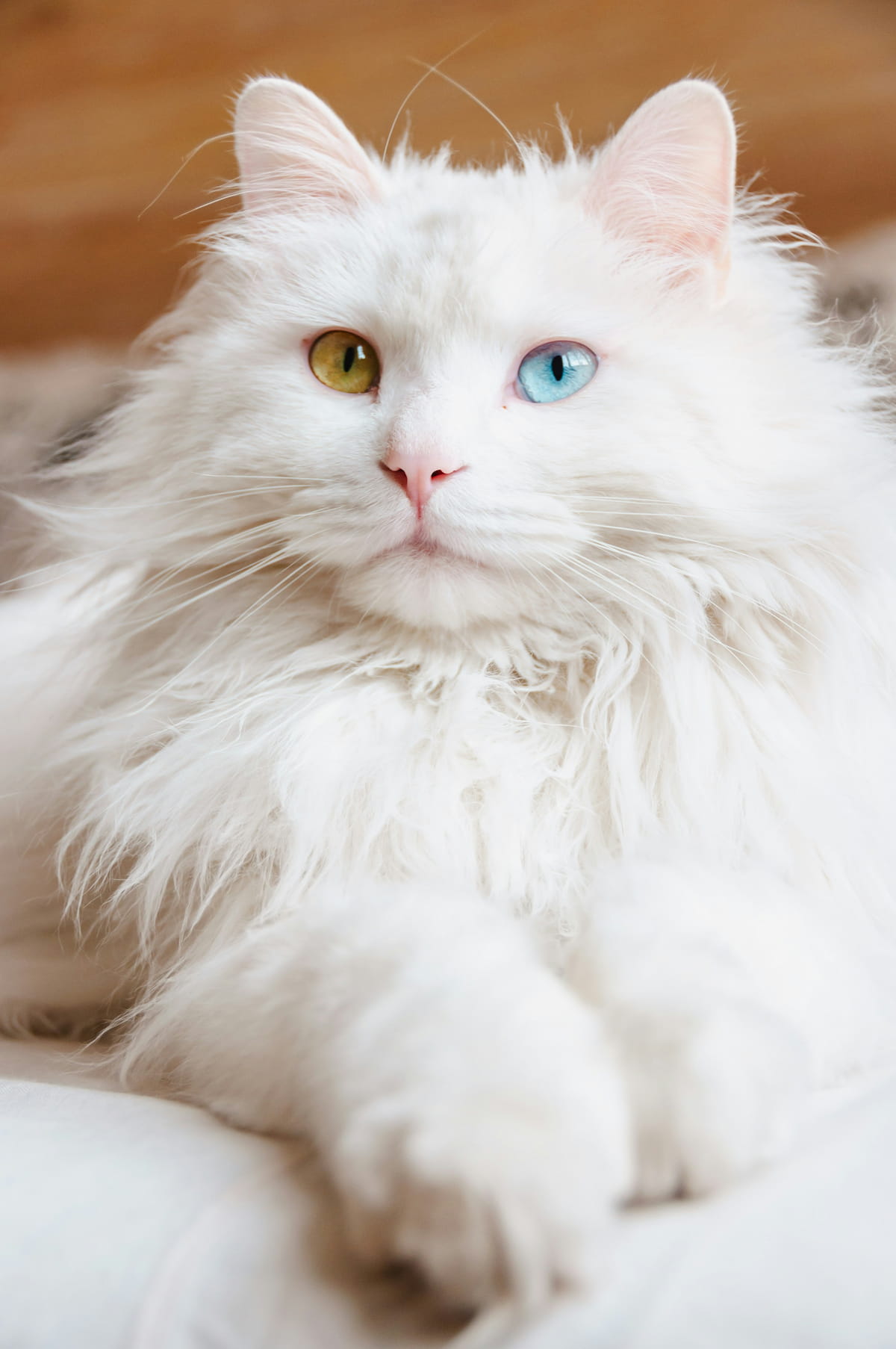
An odd-eyed white cat with one gold eye and one blue eye. Photo by Yanshu Lee on Unsplash.
All Shirazi kittens are born with blue eyes. Final color starts to show at around 6 to 8 weeks and can keep deepening for months, so ask the breeder what the parents’ eye colors are.
Deafness in the White Shirazi Cat
The same gene that masks coat color can also affect the inner ear. This is the single most important health point for this color.
Studies of white cats in general have found deafness in roughly 2 out of 10 whites with non-blue eyes, about 4 out of 10 with one blue eye, and well over half of those with two blue eyes.
Those figures cover white cats of all breeds, not Shirazis alone, but the gene works the same way.
Deafness from this gene is present from the first weeks of life. It does not develop later, and it cannot be treated.
The reliable way to know is a BAER test. It measures the brain’s response to sound in each ear and can be done on kittens from about 6 weeks old. A good breeder of white cats will have results to show you.
A deaf Shirazi can live a full, happy life as an indoor cat. It simply needs an owner who knows, uses hand signals and vibration to get its attention, and never lets it roam outside.
Keeping a White Coat White
Every Shirazi needs daily grooming. A white one shows every shortcut.
- Tear stains: The flat face causes tear overflow, and on white fur it turns rust-brown. Wipe the eye area once or twice a day with a soft damp cloth.
- Yellowing: Saliva, oils, and litter dust can tint the coat cream or yellow, mostly on the chest, paws, and rear. A bath every 3 to 4 weeks with a cat-safe whitening shampoo keeps it bright.
- Chin and ruff: Wet food stains the fur under the mouth. A wide, shallow dish and a quick wipe after meals help.
- Daily comb-through: Ten to fifteen minutes with a metal comb prevents mats, which trap dirt and discolor faster than loose coat.
Avoid human whitening products and anything with bleach or peroxide. Cats lick their coats, so whatever goes on the fur ends up swallowed.
Sun and Skin
White cats have little pigment in the skin of the ears, nose, and eyelids. Those areas can sunburn, and repeated burns raise the risk of skin cancer later in life.
Keeping a white Shirazi indoors solves most of the problem. If yours loves a sunny window, limit time in direct midday sun and have a vet look at any crusting, redness, or sores on the ear tips or nose that do not heal.
Health Beyond the Color
Color does not change the breed’s other risks. A white Shirazi faces the same concerns as any Persian, including polycystic kidney disease (PKD), breathing difficulty in very flat-faced lines, and eye irritation.
Ask for PKD DNA results on both parents along with the hearing test. Our Shirazi cat guide covers these conditions in detail.
Temperament
Coat color has no effect on personality. A white Shirazi is as calm, quiet, and people-focused as any other. See our Shirazi cat temperament article for what living with one is really like.
The one exception is a deaf cat, which may startle when touched from behind and may meow louder because it cannot hear itself.
Does White Cost More?
White is one of the oldest and most recognized Persian colors, so it is not rare in itself. Blue-eyed and odd-eyed whites are harder to find and are often priced higher.
Be careful with any seller charging a premium for blue eyes who cannot show a hearing test. Pedigree, breeder reputation, and health testing move the price far more than color does. Our Shirazi cat price breakdown explains what you should expect to pay.
What to Ask Before You Buy
- Has this kitten had a BAER hearing test, and can I see the result?
- What eye color do both parents have?
- Are both parents DNA tested clear for PKD?
- Has the kitten been seen by a vet, and is there a written health record?
- Can I see where the kittens are raised and meet the mother?
Frequently Asked Questions
Are all white Shirazi cats deaf?
No. Most white Shirazis with copper eyes hear normally. The risk rises with blue eyes, and a hearing test is the only way to be sure.
Is a white Shirazi the same as a white Persian?
Yes. Shirazi is the name commonly used in the Middle East for the Persian. Our Shirazi cat vs Persian cat comparison explains the naming.
Do white Shirazi cats stay white?
The coat itself stays white for life. Staining from tears, food, and oils is what changes the look, and regular grooming prevents it.
Are white Shirazi cats albino?
No. They have normal pigment in the eyes and carry a hidden coat color under the white. True albino cats are far rarer.
Is a white Shirazi harder to care for than other colors?
The grooming is the same, but dirt and stains show sooner. Plan on daily face cleaning and a regular bath schedule.
Recommended Reading
All About the Shirazi Cat (Persian Longhair)
Shirazi Cat vs Persian Cat: Are They the Same Breed?
Shirazi Cat Price: What to Expect When Buying or Adopting One
Shirazi Cat Temperament: Is This Gentle Breed Right for Your Home?
Shirazi, Shiraz, or Sherazi Cat? Clearing Up the Name Confusion
One Response to White Shirazi Cat: Eye Colors, Deafness Risk and Coat Care